Nebbiolo
The Wine Club · Grape Discovery Masterclass

Nebbiolo

Barolo's grape — austere, tannic, and built to agePiedmont, Italy  ·  Medieval — documented in the hills of Piedmont since the 13th century, named for the autumn fog (nebbia) that blankets the Langhe at harvest time
The Origin Story

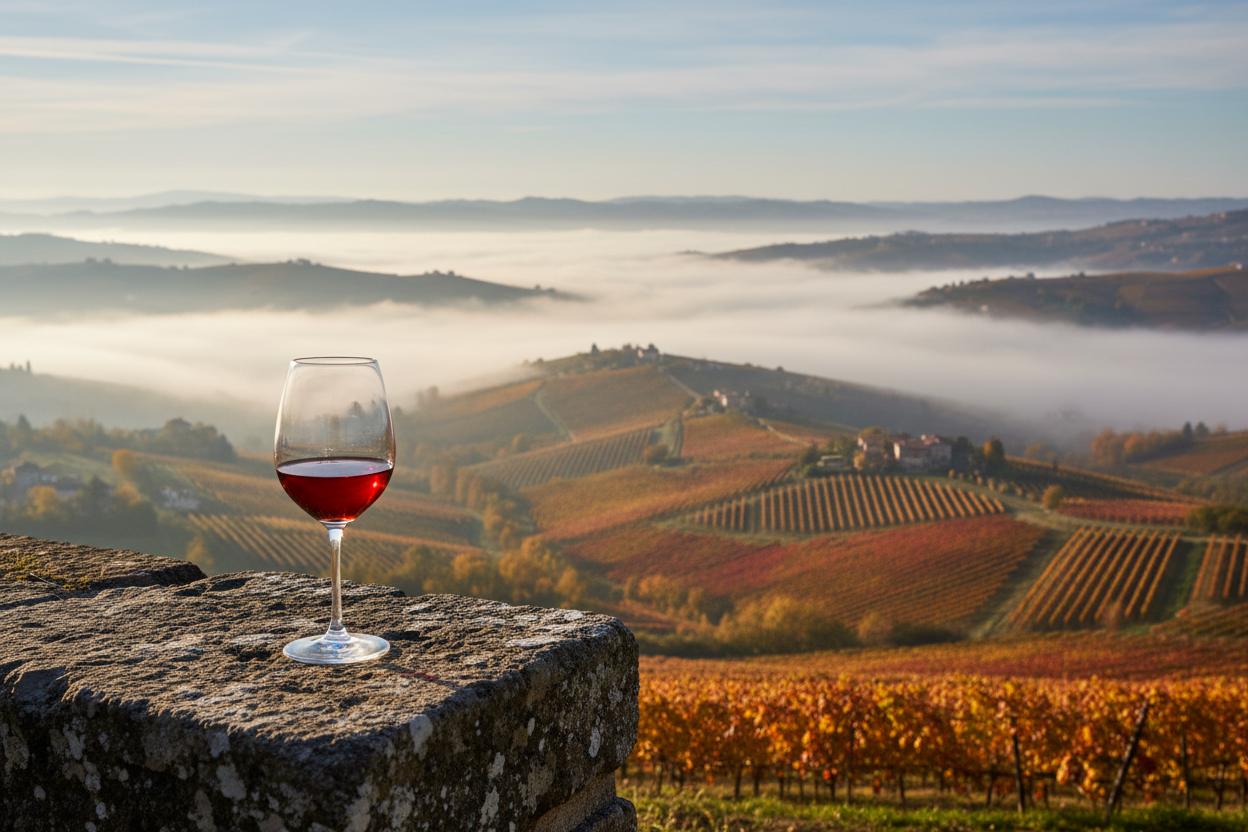
Nebbiolo is named for the fog. Every October, the hills of the Langhe in Piedmont disappear under a thick autumn mist, and it is in this fog that Nebbiolo reaches its final ripeness — late, reluctant, and on its own terms. The grape has been documented in these hills since 1268. It has never successfully established itself anywhere else.

Attempts to grow it in California, Australia, and South America have produced wines of moderate interest and no particular distinction. Nebbiolo, it turns out, is not just a grape. It is a place.

That place is a narrow band of calcareous clay hillsides in the Langhe, centred on the villages of Barolo and Barbaresco. The wines produced here — Barolo and Barbaresco DOCG — are among the most scrutinised, debated, and cellar-worthy reds in the world.

Barolo in particular carries a weight of expectation that few wines anywhere can match: minimum three years ageing before release, five for Riserva, and a tannic structure at release that can make the wine feel almost impenetrable to the uninitiated. The Barolo producers who modernised in the 1980s and 90s — shorter macerations, smaller French oak — made wines that were approachable earlier and divided the region bitterly. The traditionalists held their ground. Both camps still exist, and the argument made Barolo more interesting.

What Nebbiolo produces, at its best and with sufficient age, is unlike anything else in Italy. The colour is deceptively pale — a translucent garnet that looks almost fragile in the glass. The nose is extraordinary: dried roses, tar, leather, dried cherry, and a faint orange peel quality that no other grape replicates.

The tannins are formidable, the acidity electric, and the finish can last for minutes. It is not a wine for Tuesday evenings. It is a wine for occasions that deserve it — and for cellars patient enough to wait.

Tasting Profile
BodyFullAcidityHigh
Dried RoseDried CherryLeatherOrange PeelLiqouriceTar

Nebbiolo is one of the great paradoxes of wine — a grape that looks light and drinks heavy. The colour is pale garnet, almost translucent, giving no warning of what follows: soaring acidity, ferocious tannins, and a structural intensity that demands either significant age or significant food.

At its peak, the aromatics are extraordinary — dried roses and tar is the classic description, and it is accurate, but there is also a complexity of leather, dried fruit, and a faint orange peel bitterness that makes the wine genuinely unlike anything else. Young Nebbiolo can be austere to the point of severity. Aged Nebbiolo — ten, fifteen, twenty years from a great vintage — is among the most complete and moving wine experiences available.

The wait is the point.

In Comparison
If you like
Sangiovese
Brighter and more acidic than Tempranillo — sour cherry, dried tomato, and a savory finish. Built for the table in a way that rewards food over every other consideration.
Try
Nebbiolo
Everything Sangiovese does at the table, but turned up and slowed down. Drier, more structured, and built to age. The wine that rewards patience the way a great meal rewards time.
This is your kare-kare wine. The peanut richness needs the acidity to cut through it, the oxtail fat needs the tannins to grip, and the bagoong saltiness mirrors the wine's own savoury depth. Also exceptional with slow-braised beef, aged hard cheese, and anything that has been cooking since morning.
In Our Portfolio

We don't carry this variety yet — but it's on our radar.